
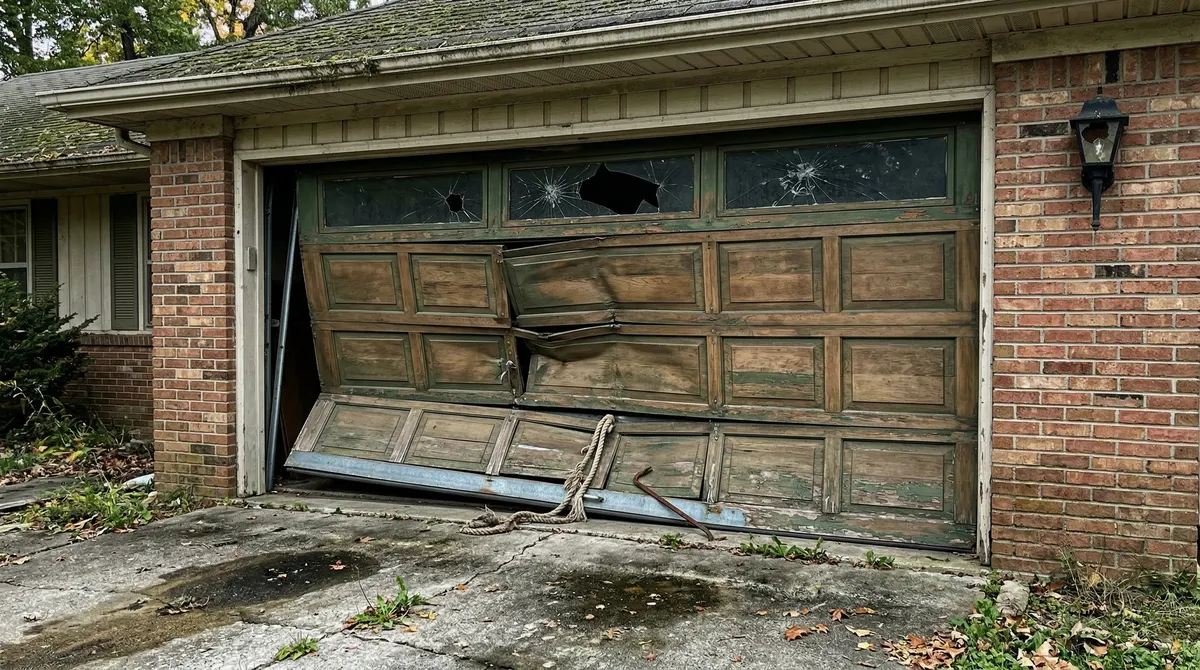
Small Problems Turn Into Big Bills
Most expensive garage door repairs start as small problems that got ignored. That little squeak turns into a seized roller. That slight gap at the bottom becomes a rusted-out panel. That slow-moving door burns out the opener motor.
Here are ten signs your garage door needs attention. Some are quick fixes. Others mean it's time to call a technician. All of them will get worse, and more expensive, if you pretend they'll go away on their own.
1. The Door Opens or Closes Slowly
A healthy garage door should open fully in about 12 to 15 seconds. If it's noticeably slower, taking 20 seconds or more, something is creating extra resistance. Common culprits: worn rollers, dried-out hinges, track misalignment, or a weakening opener motor. Lubrication fixes it about half the time. The other half, something needs replacement.
2. You Hear Grinding, Scraping, or Popping Sounds
Garage doors make noise, but there's a difference between normal operational sound and a cry for help. Grinding usually means metal rubbing on metal, worn rollers in the track or dry hinges. Popping sounds can indicate a spring that's about to break. Scraping means something is out of alignment and wearing down fast.
Don't just turn up the radio. Identify where the sound is coming from. If it's the springs, call a pro. If it's rollers or hinges, lubrication might buy you time, but replacement is usually the real fix.
3. Sagging Sections
Disconnect the opener and lift the door manually to about waist height. Let go. Does it stay put, or does one section sag or the whole door drift down? Sagging means the springs are losing tension or one side is weaker than the other. A sagging door puts uneven stress on tracks, rollers, and the opener, accelerating wear on everything.
4. Your Energy Bills Went Up
If your electric bill jumped and you haven't changed your habits, check your garage door. An uninsulated or poorly sealed garage door lets Tampa's 95-degree summer heat pour into your garage. If that garage shares a wall with your house, and most Florida garages do, your AC works overtime to compensate. Weatherstripping replacement costs $20 to $75. Running your AC against a hot garage costs a lot more.
5. Shaking or Vibrating During Operation
Some vibration is normal. Visible shaking is not. A door that shakes during operation usually has loose hardware, worn rollers, or a track that's come out of alignment. Left alone, vibration loosens more hardware, and the problem snowballs. Tighten every bolt and bracket you can see. If the shaking continues, the tracks or rollers need professional attention.
6. The Door Won't Close All the Way
If the door reverses before reaching the floor, it's usually one of two things: the close-limit switch needs adjustment, or the safety sensors are misaligned or dirty. Check the sensors first, wipe them with a cloth and make sure both lights are on (usually one green, one amber). If the sensors are fine, the limit switch on the opener may need tweaking. If neither fix works, call a tech.
7. Gaps at the Bottom of the Door
This is the one people ignore the most, and it causes the most secondary damage. A gap at the bottom of your garage door, even half an inch, lets in rain, bugs, rodents, dust, and hot air. In Florida, it's an open invitation for palmetto bugs, lizards, and standing water during afternoon thunderstorms.
Gaps happen when the bottom seal wears out, the floor settles unevenly, or the door has warped. A new bottom seal costs $15 to $40 and takes 20 minutes to install. If the door itself is warped, that's a bigger issue, but still cheaper to address now than after water damage ruins what's stored in your garage.
8. You Can See Broken or Stretched Springs
Take a look at the springs above your garage door. Do you see a visible gap in the coils? Does one spring look stretched while the other is tight? A broken spring is obvious, there's a clear separation in the coil. A stretched spring is more subtle but means failure is coming soon.
Do not touch the springs. Do not try to adjust them. Call a professional. Springs under tension can cause serious injury.
9. The Opener Motor Grinds but the Door Doesn't Move
When you hear the motor running but the door stays still, the most likely culprit is a stripped gear inside the opener. The motor is spinning, but the gear that connects it to the drive mechanism is chewed up and can't transfer power. Gear replacement costs $150 to $200. Ignoring it burns out the motor, and then you're looking at a full opener replacement for $350 to $650.
10. The Door Falls Too Fast When Closing
A garage door should close at a controlled, steady speed. If it drops the last foot or two, or closes faster than it used to, the springs or cables aren't providing enough resistance. This is a safety issue, a fast-falling door can damage vehicles, crush objects, and injure people or pets. Stop using the door and get it inspected immediately.
When to Call a Pro
Signs 1 through 7 might start as DIY fixes, lubrication, tightening hardware, replacing a seal. Signs 8 through 10 are all professional repair territory. Don't gamble with spring, cable, or fast-falling-door problems.
If you're seeing any of these signs and need garage door repair Tampa homeowners can count on, Champions Garage Door Service can diagnose the issue quickly and give you an honest assessment. Call us at (813) 999-5749, we'd rather catch a small problem now than charge you for a big one later.