
Good News: Sometimes One Panel Is All You Need
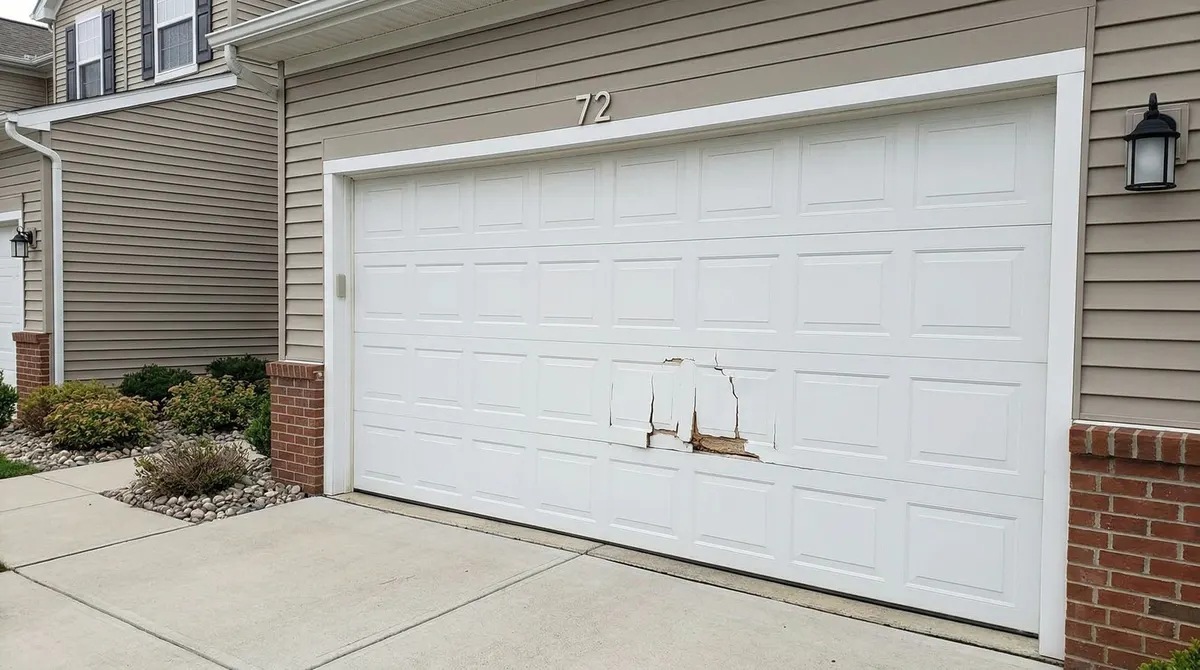
A car bumped the bottom panel. A basketball dented a section. A windblown branch left a crack. Whatever happened, you're looking at one damaged panel on an otherwise perfectly good garage door. The question: can you replace just that one panel instead of buying a whole new door?
The short answer is yes, in many cases. But not always. And there are a few things you need to know before you go that route.
When Single Panel Replacement Works
Panel replacement makes sense when all of these conditions are met:
- Only one or two panels are damaged. If three or more sections need replacing, the cost gets close enough to a new door that replacement makes more sense.
- Your door model is still in production. Panels are manufacturer-specific and model-specific. If the company still makes your door, they can supply matching panels. If the model has been discontinued, you're out of luck.
- The damage is limited to the panel itself. If the impact also bent the track, damaged the hinges, or threw the door out of alignment, a panel swap alone won't fix the bigger problem.
- The door is less than 15 years old. Beyond 15 years, even if panels are available, the rest of the door's hardware is aging. Investing $300 to $500 in a panel for a 20-year-old door isn't the best use of money when the springs, cables, and other panels are nearing end-of-life too.
When You Need a Full Door Replacement
There are situations where a panel swap isn't practical or isn't worth the money:
The Panel Is Discontinued
This is the most common problem. Garage door manufacturers update their product lines every few years. If your door is a Clopay model from 2008, the exact panel profile, color, and insulation type might not exist anymore. A mismatched panel sticks out, the color won't quite match (even same-color panels fade differently over time), the texture might be slightly different, and the panel lines might not line up.
Multiple Panels Are Damaged
At $250 to $500 per panel (parts and labor), the math changes fast when you need more than one. Two panels at $400 each is $800, and a basic new insulated door installed starts around $1,000 to $1,200. At that point, you get a full warranty, everything matches, and you reset the clock on the door's lifespan.
The Door Is Structurally Compromised
A hard impact that bent the panel might also have bent a hinge, shifted the track, or damaged a strut. If the door doesn't track straight or has visible alignment issues after the impact, replacing the panel alone won't fix it. The whole system needs to be assessed.
The Door Is Old and Worn
Putting a brand-new panel on a 20-year-old door is like putting new tires on a car with a bad transmission. The panel will look noticeably newer than the surrounding sections, and you'll likely be replacing the door within a few years anyway.
Cost Comparison
Here's what you're looking at in the Tampa market:
Single Panel Replacement
- Standard steel panel: $250 - $400 (parts and labor)
- Insulated steel panel: $300 - $500
- Carriage house or decorative panel: $350 - $550
Labor for a panel swap typically runs $100 to $200. The technician has to disconnect the springs (or at minimum the opener), remove the hinges and rollers connecting the damaged section, slide the old panel out, slide the new one in, and reassemble everything. It usually takes one to two hours.
Full Door Replacement
- Basic insulated steel door (16x7): $1,000 - $1,500 installed
- Mid-range insulated door with style options: $1,500 - $2,500
- Premium or carriage house door: $2,500 - $4,000+
How to Find Your Door's Model Number
If you decide to go the panel replacement route, the first thing you need is your door's manufacturer and model number. Here's where to look:
- Inside the door, top section: Most manufacturers put a sticker or stamp on the inside of the top panel or the inside of the end stile (the vertical edge piece). It lists the brand, model number, color code, and sometimes the date of manufacture.
- On the hardware: Some brands stamp their name on hinges or brackets.
- Installation paperwork: If you still have the original purchase documents, the model number is on the invoice or warranty card.
- Home inspection report: Some home inspection reports from when you bought the house note the garage door brand and model.
If you can't find a model number, take a photo of the door (front and back), measure the panel height and width, and note any distinguishing features, window pattern, panel profile (raised, recessed, flush), and any decorative elements. A good garage door company can often identify the door from photos.
The Color Matching Problem
Even when you get the right panel, color matching isn't guaranteed. Your existing door has been sitting in the Florida sun for years. UV exposure fades paint. A factory-fresh panel in "White" might not match your sun-faded "White" door perfectly.
The mismatch is usually subtle, most people wouldn't notice from the street. But if your door is a dark color (brown, black, dark gray) and it faces west or south, the fading is more pronounced and a new panel will stand out more.
Some homeowners solve this by having the entire door repainted after the panel swap. A fresh coat of exterior paint ($150 to $300 for a professional job) makes everything uniform.
Our Advice
If the damage is limited to one panel and the door is under 12 years old, panel replacement is usually the smart move. You save $500 to $1,000+ compared to a full door, and the result looks good. If the door is older, multiple panels are damaged, or you can't find matching panels, a new door is the better investment.
Champions Garage Door Service can source panels for most major brands including Clopay, Amarr, Wayne Dalton, and CHI. Call us at (813) 999-5749 and we'll come out, identify your door, and tell you whether a panel swap makes sense or whether you're better off going new.