
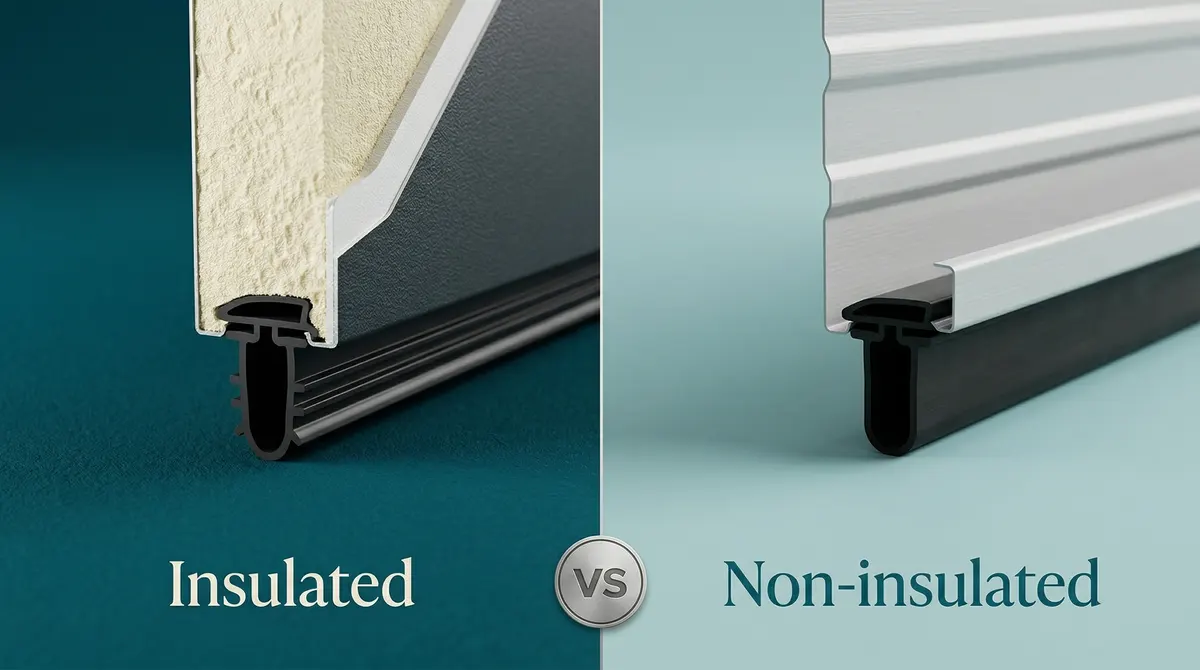
Do You Really Need Insulation in Florida?
It sounds counterintuitive. Florida doesn't have harsh winters. Why would you need an insulated garage door? The short answer: because it's not about keeping cold out, it's about keeping heat out. And in Tampa, where your garage can hit 130 degrees on a July afternoon, that makes a real difference.
But insulated doors cost more, and the upgrade isn't worth it for everyone. Here's how to figure out if it makes sense for your situation.
What R-Value Means (and Why It Matters)
R-value measures how well a material resists heat transfer. Higher R-value means better insulation. Garage doors typically range from R-0 (no insulation) to R-18 (heavily insulated).
- R-0 to R-6: Single-layer steel or non-insulated door. Essentially a sheet of metal between your garage and the outside.
- R-6 to R-9: Polystyrene insulation (rigid foam board) sandwiched between steel layers. Basic insulation.
- R-12 to R-18: Polyurethane insulation injected between steel layers. This is the good stuff, denser, better insulating, and it also adds structural rigidity to the door.
For most Florida homes, an R-12 to R-16 door hits the sweet spot between performance and cost. Going higher than R-18 provides diminishing returns in our climate.
Energy Savings: The Real Numbers
An uninsulated garage in Tampa routinely hits 120 to 140 degrees in summer. That heat radiates through any wall shared with your home's living space, making your AC system work harder.
An insulated garage door with an R-value of 12 or higher keeps the garage 10 to 20 degrees cooler than an uninsulated door. That doesn't sound like much until you calculate the impact on your AC.
Based on what we've heard from customers who made the switch and tracked their bills:
- Attached garage, door facing west or south: $150 - $200/year savings on cooling costs
- Attached garage, door facing north or east: $100 - $150/year savings
- Detached garage: Minimal energy savings for the house, but the garage itself stays much more comfortable
These numbers obviously vary based on your home's layout, your AC system, and how well the rest of your garage is sealed. But for most Tampa homes with an attached garage, the energy savings are real and measurable.
Beyond Energy: Other Benefits of Insulation
Noise Reduction
Insulated doors are dramatically quieter than non-insulated doors. The polyurethane fill dampens vibration and reduces the rattling and booming that single-layer steel doors produce. If you have a bedroom near the garage, or your teenager comes home at midnight, the noise difference is significant.
Durability and Dent Resistance
Polyurethane-insulated doors are stronger than non-insulated doors. The foam core bonds to the steel skins and creates a rigid panel that resists dents from basketballs, car doors, and general impacts. Single-layer steel doors dent easily and tend to oil-can (flex and pop) in wind gusts.
Appearance
Insulated doors have a finished interior, the back side has a clean steel or vinyl surface instead of exposed framing and bare metal. If you spend any time in your garage (workshop, gym, storage access), the clean look matters more than you might expect.
The Cost Difference
Here's what you're looking at in the Tampa market:
- Non-insulated single-layer steel door (16x7): $600 - $900 installed
- Polystyrene insulated door (R-6 to R-9): $800 - $1,200 installed
- Polyurethane insulated door (R-12 to R-18): $1,000 - $1,500 installed
The price difference between non-insulated and a good polyurethane-insulated door is roughly $200 to $600 depending on size and style. If you're saving $150 a year on energy, the upgrade pays for itself in one to four years. After that, it's pure savings, plus you get the noise and durability benefits for free.
When Insulation Is Definitely Worth It
- Your garage is attached to your home. This is the biggest factor. If the garage shares a wall or ceiling with conditioned living space, an insulated door directly reduces your cooling load.
- You use your garage as a workspace. Workshop, home gym, hobby area, if you spend time in the garage, an insulated door keeps it bearable without running a portable AC unit all summer.
- You have living space above the garage. Common in Tampa-area two-story homes. A bonus room or bedroom above the garage gets hammered by heat rising from an uninsulated garage below.
- The door faces west or south. Direct afternoon sun bakes a west-facing garage door. Insulation provides a meaningful barrier against that solar heat gain.
When You Might Skip Insulation
- Detached garage used only for parking. If the garage doesn't connect to your home and you're just parking a car, the energy savings don't apply to your house. The garage will still be cooler, but the financial case is weaker.
- Rental property with tight budget. If you're replacing a garage door on a rental and cost is the priority, a non-insulated door gets the job done. Just know your tenants will notice the difference in their power bills.
Our Recommendation
For most Tampa homeowners, an insulated door with an R-value of 12 or higher is the right call. The upfront cost difference is modest, the energy savings are real, and the door looks and performs better in every measurable way.
Champions Garage Door Service installs both insulated and non-insulated doors. We'll give you honest advice based on your specific garage layout. Call (813) 999-5749 for a free estimate and we'll walk you through your options.