
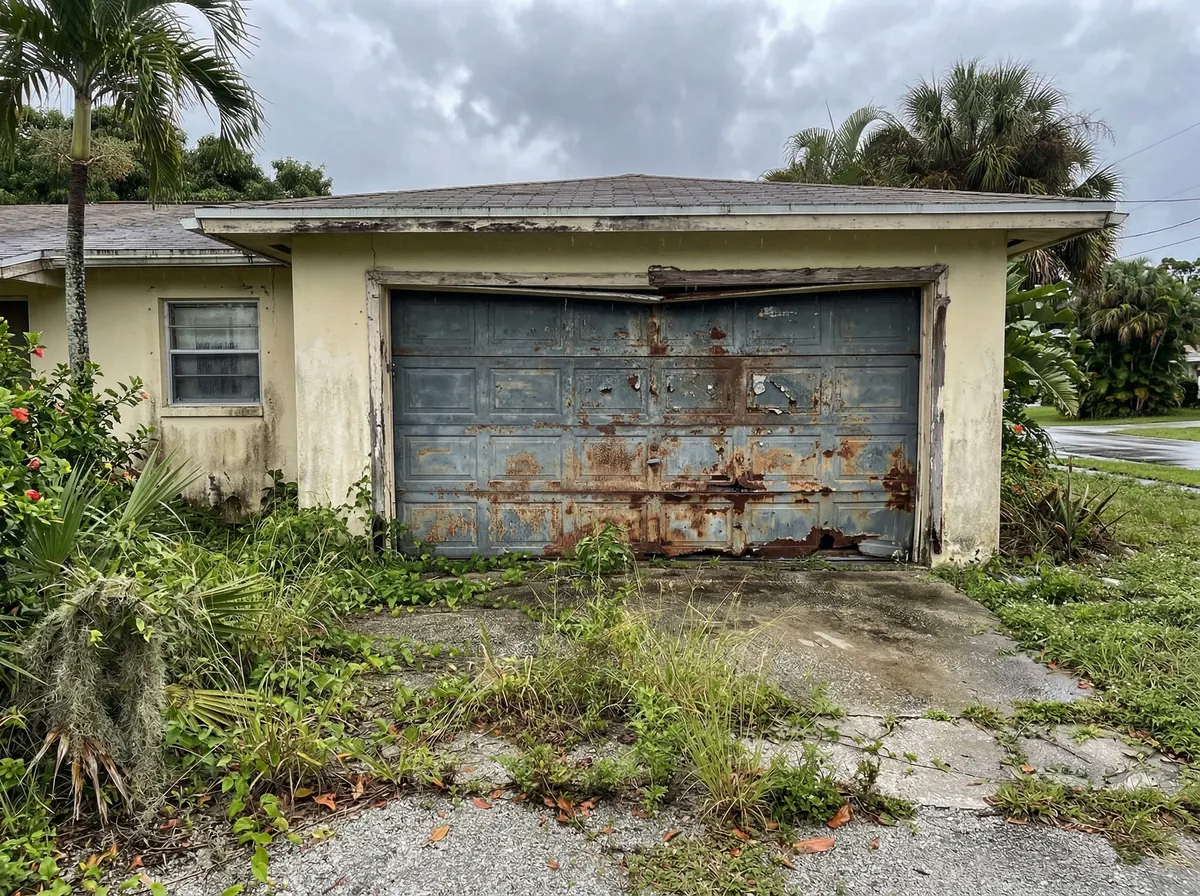
The Honest Answer: It Depends on the Material and Where You Live
When someone asks "how long does a garage door last?" the generic answer is 15 to 30 years. Which is technically accurate and completely useless. The real answer depends on what your door is made of, how well it's maintained, and, this is the big one for us, whether you live in Florida.
Florida is rough on garage doors. The combination of humidity, UV exposure, salt air (if you're near the coast), and the occasional hurricane creates conditions that age doors faster than the national averages you'll find online. Here's what we actually see in the field across the Tampa Bay area.
Steel Garage Doors: 20 - 30 Years
Steel is the most popular garage door material in Tampa, and for good reason. A quality steel door from Clopay, Amarr, or Wayne Dalton, properly maintained, will last 20 to 30 years in Florida. Modern steel doors are galvanized and coated with baked-on polyester paint that resists rust and fading better than doors made even 15 years ago.
The weak points on steel doors in Florida:
- Bottom panel rust: The bottom section sits closest to the ground and catches the most water. This is where rust starts on most steel doors. Keeping the bottom seal intact and the bottom edge clean prevents premature corrosion.
- Paint fading: Direct sun exposure, especially on west-facing doors, fades paint faster. Dark colors fade more noticeably than light colors. Expect visible fading after 8 to 12 years on sun-exposed doors.
- Dent accumulation: Kids, cars, lawn equipment. Over 20+ years, minor dents add up. Individual dented panels can be replaced to extend the door's life.
Wood Garage Doors: 15 - 20 Years
Real wood garage doors are beautiful but high-maintenance, especially in Florida. The combination of humidity, rain, and intense UV breaks down wood finishes fast. Without regular maintenance, a wood door in Tampa can start showing significant deterioration within 5 to 8 years.
To hit the 15 to 20 year mark with a wood door in Florida, you need to:
- Refinish or reseal the door every 2 to 3 years
- Repaint or restain as soon as you notice peeling or cracking
- Address any soft spots or rot immediately, they spread fast in humidity
- Keep the bottom edge sealed so it doesn't absorb standing water
Most Tampa homeowners who love the wood look end up switching to faux-wood steel doors when their real wood door ages out. Same aesthetic, fraction of the maintenance.
Aluminum Garage Doors: 20+ Years
Aluminum doesn't rust, which gives it a natural advantage in Florida's humidity and coastal salt air. Aluminum and glass modern-style doors have become popular in contemporary Tampa homes, and they hold up well in our climate.
The downsides: aluminum dents more easily than steel (it's a softer metal), and the glass panels in modern aluminum doors can crack from impact or extreme temperature stress. Aluminum doors also offer less insulation than steel unless they're specifically designed with insulated panels.
For coastal homes in St. Pete, Clearwater, or anywhere near the Gulf, aluminum is often the best long-term choice because you eliminate the corrosion risk entirely.
Fiberglass Garage Doors: 15 - 20 Years
Fiberglass doors resist rust and salt air, making them a decent option for coastal Florida homes. They won't corrode or rot. However, fiberglass has its own weaknesses: it becomes brittle over time with UV exposure, it cracks more easily than steel on impact, and it can yellow or discolor after years in the Florida sun.
Fiberglass doors were more popular 15 to 20 years ago. Most new installations in the Tampa area have moved toward insulated steel or aluminum/glass combinations. If you have an existing fiberglass door in decent shape, it can keep going for a while, but when it's time to replace, most homeowners choose a different material.
What Shortens Garage Door Lifespan in Florida
Humidity
Tampa's average humidity runs 74% to 80%. That moisture accelerates rust on steel components, promotes mold and mildew on wood, and degrades rubber seals and weatherstripping faster than in drier climates. Regular lubrication and seal replacement are your best defenses.
Salt Air
If you live within a few miles of the Gulf, salt in the air corrodes metal at an accelerated rate. Springs, hinges, tracks, and steel door skins all suffer. Homes in beach communities may see component lifespans cut by 25% to 40% compared to inland homes.
Hurricanes and Storms
Even if your door survives a hurricane without failing, the stress of high winds, flying debris impacts, and water intrusion takes a cumulative toll. A door that's been through several major storms may look fine but have weakened panels, stressed hinges, and fatigued springs.
UV Exposure
Florida gets approximately 240 to 270 sunny days per year. That constant UV exposure degrades paint, fades colors, and breaks down fiberglass and rubber components. West-facing and south-facing doors take the worst beating.
Signs It's Time to Replace
Even if your door is within its expected lifespan, these signs suggest replacement is smarter than continued repairs:
- Multiple panels are damaged, rusted, or warped
- The door visibly sags when in the open position
- You're repairing it more than once a year
- It doesn't meet current Florida wind code
- The door is uninsulated and you want to reduce energy costs
- Replacement panels are no longer available for your model
At Champions Garage Door Service, we'll tell you honestly whether your door has more life in it or whether replacement makes more financial sense. Call (813) 999-5749 for a free assessment.