
The Cheapest Fix That Makes the Biggest Difference
Weatherstripping is one of those things nobody thinks about until they notice water on the garage floor, bugs crawling in every night, or their energy bill creeping up for no obvious reason. It's the rubber and vinyl sealing around your garage door, bottom, sides, and top, and its job is to keep the outside out.
In Florida, weatherstripping works harder than anywhere else in the country. Our heat degrades rubber faster. Our rain tests every seal. And our bugs will exploit the smallest gap like they've got a floor plan of your garage.
Signs Your Weatherstripping Needs Replacement
You Can See Light Under the Door
Close your garage door during the day, turn off the lights, and look at the bottom edge. If you see daylight coming through, even a thin line, the bottom seal is compressed, cracked, or missing. Where light gets in, water and bugs follow.
Water Gets In During Rain
After a Tampa afternoon thunderstorm, check the floor along the base of the door. If there's water inside, the bottom seal isn't doing its job. Check the sides too, water running down the door face should be deflected by the side seals before it reaches the floor.
Bugs and Lizards Are Getting In
This is the one that finally motivates most Florida homeowners. Palmetto bugs, ants, geckos, and even small snakes exploit gaps in weatherstripping. If you're finding more critters in the garage than usual, look at the seals first. A gap of even a quarter inch is plenty for most Florida insects.
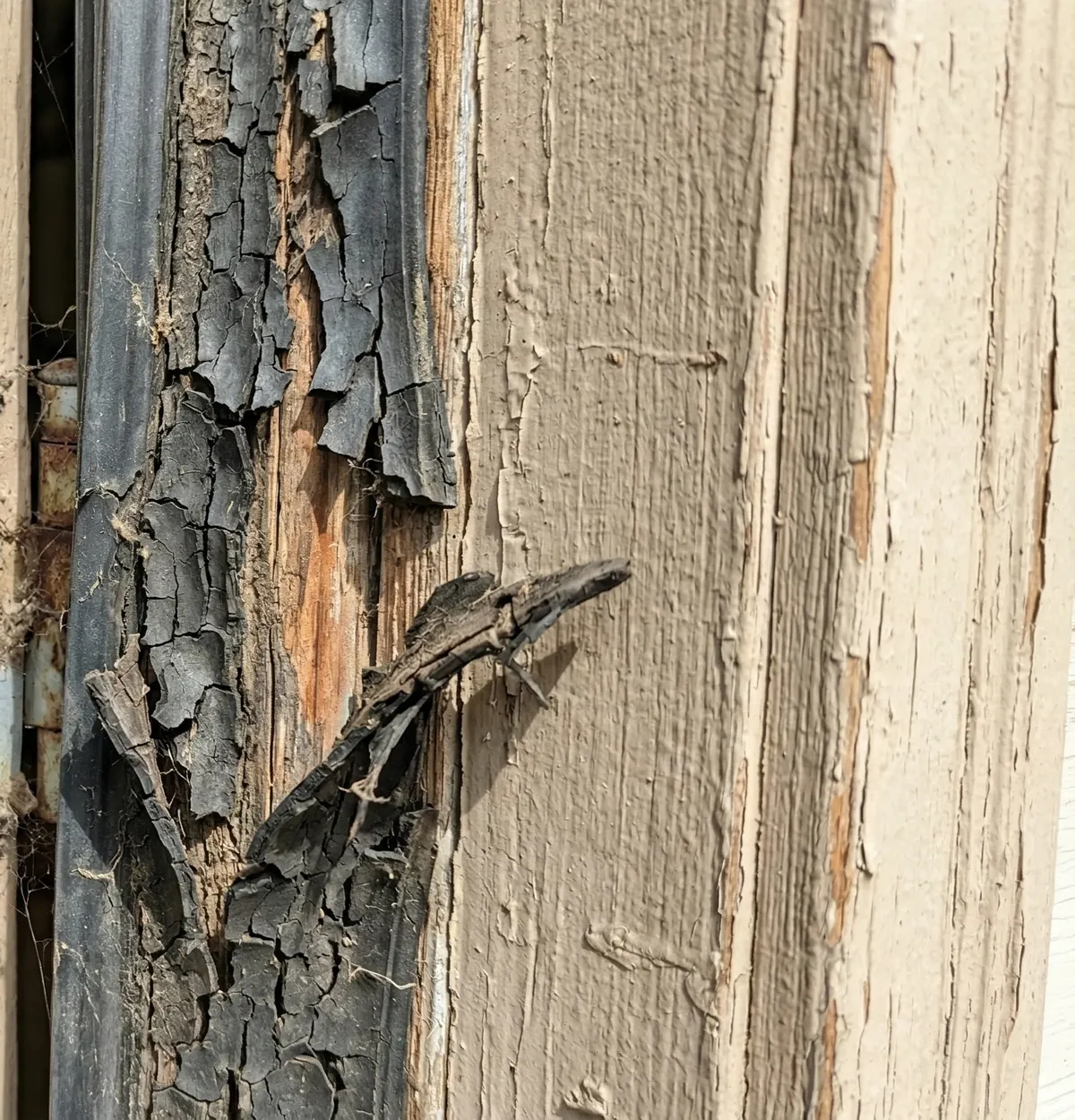
The Rubber Is Cracked, Hard, or Flat
Physically check the bottom seal. Press on it, is it still flexible and springy, or is it hard and brittle? UV exposure and Florida's heat cook the oils out of rubber over time, leaving it stiff and cracked. Once it loses its flexibility, it can't conform to the floor surface and gaps open up.
Your Garage Is Hotter Than It Should Be
Even small gaps let hot air pour in during summer. If your garage feels like a furnace even with an insulated door, check all the seals. Failed weatherstripping on a 16-foot double door can let in a surprising amount of hot outside air.
Types of Garage Door Weatherstripping
Bottom Seal (Astragal)
This is the rubber strip along the bottom edge of the door that contacts the floor. It's the most important seal and the one that wears out first. Bottom seals come in several profiles:
- T-style: Has a T-shaped bulb that slides into a retainer channel on the door bottom. Most common on modern doors. Easy to replace, you just slide the old one out and the new one in.
- Bead-style: Round beads along the edges that snap into a retainer. Common on Clopay and some Amarr doors.
- Bulb seal: A rounded bulb that compresses against the floor. Provides a tighter seal on uneven floors.
Cost: $15 to $40 for the seal itself. A 16-foot double-door bottom seal typically runs $25 to $35.
Side and Top Seals (Jamb Seals)
These are the vinyl or rubber strips attached to the door frame along the sides and top of the opening. When the door closes, it presses against these seals. They prevent rain, wind, and debris from getting in around the edges.
Side seals last longer than bottom seals because they don't get stepped on, driven over, or sit in standing water. But they still deteriorate in Florida heat. Check them every year or two.
Cost: $20 to $50 for a full set (both sides and top).
Threshold Seal
A threshold seal is a strip that adheres to the garage floor, creating a raised barrier the door closes against. This is especially useful if your concrete floor is uneven or has settled, leaving a gap that a bottom seal alone can't bridge.
Many Tampa garages have slight slopes or uneven spots where the concrete meets the driveway. A threshold seal fills those gaps where the bottom seal can't reach.
Cost: $25 to $50 for a 16-foot threshold.
Florida-Specific Weatherstripping Issues
Heat Degradation
A west-facing or south-facing garage door in Tampa takes direct sun for hours every day. That UV and heat breaks down rubber and vinyl faster than in cooler climates. Bottom seals on sun-exposed doors might last 3 to 4 years instead of the 5 to 7 years you'd get up north.
Pest Intrusion
Florida has more bug species actively trying to get into your garage than just about any other state. Palmetto bugs, fire ants, wolf spiders, and termites all exploit weatherstripping gaps. A tight seal isn't just about comfort, it's pest control.
Storm Water
Tampa gets 50+ inches of rain per year, much of it in heavy afternoon downpours. Good weatherstripping is your first line of defense against water intrusion. During tropical storms and hurricanes, the seals work even harder. If your weatherstripping is already worn when storm season arrives, water is getting in.
DIY Replacement Guide
Bottom Seal Replacement (20 Minutes)
- Open the door fully so you can access the bottom edge.
- Look at the retainer channel, the metal track on the bottom of the door that holds the seal. If it's a T-track or bead track, note the style so you buy the right replacement.
- Slide the old seal out from one end. If it's stuck, a flat screwdriver helps pry it loose. On some doors, you may need to remove a retainer cap at one end.
- Slide the new seal in from the same end. Lubricate the track with a bit of dish soap to make it glide easier. Work it across the full width of the door.
- Trim the excess with a utility knife and replace any retainer caps.
- Close the door and check for light gaps. The seal should compress evenly along the floor.
Side Seal Replacement (30 Minutes)
Side seals are typically nailed or screwed to the door frame. Remove the old seal, clean the surface, and attach the new one with galvanized nails or screws every 8 to 10 inches. Make sure the seal contacts the door face when closed, you want a light compression, not a gap and not a heavy press.
When to Call a Pro
Weatherstripping replacement is one of the easier garage door jobs for a handy homeowner. But call a pro if the issue is actually a warped door panel, an uneven floor, or track misalignment causing gaps that no seal can fix. If your door doesn't sit flat against the frame when closed, new weatherstripping alone won't solve the problem. Champions Garage Door Service can diagnose whether you need new seals, a door adjustment, or something more. Call (813) 999-5749 for a quick assessment.