
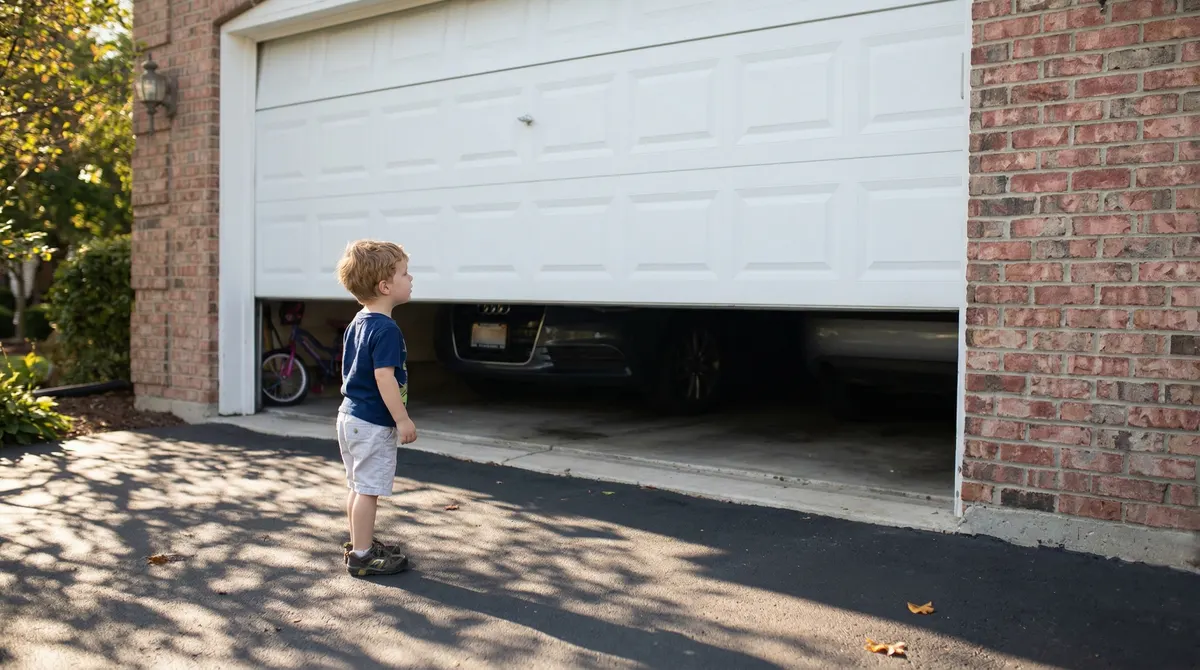
Your Garage Door Is the Heaviest Moving Thing in Your Home
People don't think of their garage door as dangerous. It just goes up and down, right? But your garage door weighs between 200 and 400 pounds, moves on a system of high-tension springs and cables, and operates multiple times a day, often with kids, pets, and cars passing underneath.
The Consumer Product Safety Commission estimates that garage doors cause about 30,000 injuries per year in the U.S. Most of these are preventable with basic knowledge and a few minutes of monthly attention.
Test the Auto-Reverse Every Month
Federal law has required auto-reverse mechanisms on all garage door openers sold since 1993. There are two types, and your opener should have both.
Mechanical Reverse
This is the force-sensing system. When the door hits an object while closing, it should reverse immediately. To test it:
- Lay a 2x4 board flat on the ground in the center of the door opening
- Press the close button
- The door should hit the board and reverse within 2 seconds
If the door doesn't reverse, or if it reverses but only after pressing hard against the board, the force settings on your opener need adjustment. Do this test monthly. It takes 30 seconds and it protects your family.
Photo-Eye Reverse
The photo-eye sensors are the two small devices mounted at the bottom of the door tracks, about 6 inches off the ground. They send an invisible beam across the door opening. When anything breaks that beam while the door is closing, the door stops and reverses.
Test this by starting to close the door and then waving your foot through the sensor beam. The door should reverse instantly. If it doesn't, check that the sensors are clean, aligned, and the wires aren't damaged. If cleaning and realigning doesn't fix it, call a technician.
In Florida, spider webs and dust are the most common reasons sensors stop working. A quick wipe with a cloth once a month keeps them clear.
Know How to Use the Manual Release
Every garage door opener has an emergency manual release, it's the red cord hanging from the opener rail. You need to know how to use it before you need to use it.
When the Door Is Down
If the power goes out or the opener fails with the door closed, pull the red cord straight down. This disconnects the door from the opener trolley. You can then lift the door manually by the handle at the bottom.
When the Door Is Up
Be careful here. If the door is open and you pull the release, the door might come crashing down, especially if the springs are weak or broken. If the door is stuck in the up position and you're not sure about the spring condition, don't pull the release. Call a professional instead.
Re-Engaging After a Power Outage
Once power returns, close the door manually, then pull the release cord toward the opener unit (not down). Press the remote or wall button, and the trolley will reconnect on the next cycle.
Spring Safety: Don't Touch Them
Garage door springs are under extreme tension, enough force to lift a 300-pound door. When a spring breaks, it releases that energy violently. A flying spring or a slipping winding bar can cause broken bones, deep lacerations, or worse.
Here's what every homeowner should know about spring safety:
- Never try to adjust or replace springs yourself. This is not a DIY project. Professional technicians use specialized tools and follow safety protocols that take years to learn.
- Don't ignore a broken spring. If you see a gap in the coils above your door, or if the door suddenly feels extremely heavy, stop using it. A door operating without proper spring support can drop unexpectedly.
- Keep the area around springs clear. Don't hang things from the torsion spring shaft or store items near the springs. If a spring breaks, you want nothing and nobody in its path.
- Listen for warning signs. Squealing, grinding, or visible rust on springs means they're wearing out. Lubricate them and schedule an inspection.
Keep Kids Away from the Moving Door
Children are the most common victims of garage door injuries. They don't understand the forces involved, and they move fast.
- Never let kids play with the opener remote or wall button. The wall button should be mounted at least 5 feet off the ground, out of reach of small children.
- Teach kids that the garage door is not a toy. No running under a moving door. No trying to race the door. No hanging on the door or the tracks.
- Keep fingers away from panel joints. The sections of a garage door pivot at the hinges as the door moves. Fingers caught between panels can be crushed. Modern doors have pinch-resistant panel joints, but older doors may not.
- Always watch the door close completely. Don't press the button and walk away. Stay where you can see the door until it's fully closed. If a child or pet darts under the closing door, you need to be able to hit the button again.
Carbon Monoxide and Attached Garages
If your garage is attached to your home, and most Tampa-area garages are, carbon monoxide is a real concern. Never run a car, generator, or gas-powered equipment in a closed garage, even with the garage door open partway. Carbon monoxide is odorless and can seep into your home through shared walls, the door to the house, and gaps in the ceiling.
Install a carbon monoxide detector in the room closest to the garage, and another near bedrooms. In Florida, we see this come up most after hurricanes when people run generators in the garage. Don't do it. Generators go outside, period.
Cable Safety
The lift cables on your garage door are under tension and can snap without warning as they age. A snapping cable whips with serious force, enough to cause deep cuts or eye injuries.
- Visually inspect cables monthly for fraying, rust, or loose strands
- If you see any fraying at all, call for replacement. Frayed cables don't get better, they get worse until they break
- Never stand in the path of a cable while the door is moving
The Monthly Safety Check
Take 5 minutes once a month to run through this list:
- Test the mechanical auto-reverse with a 2x4
- Test the photo-eye reverse by waving your foot through the beam
- Visually check springs for gaps or rust
- Visually check cables for fraying
- Make sure the wall button is out of children's reach
- Verify the emergency release cord is accessible and not tangled
Five minutes a month keeps your family safe. If anything fails these checks, Champions Garage Door Service can get it fixed fast. Call us at (813) 999-5749 for same-day safety repairs across the Tampa Bay area.