
15 Minutes a Month Saves Hundreds a Year
Your garage door is a mechanical system with springs, cables, rollers, hinges, tracks, and an electric motor. It opens and closes over a thousand times a year. Like any machine with that many moving parts and that much use, it needs basic maintenance, and almost nobody does it.
The result? Springs that break two years early. Rollers that seize up and throw the door off track. Openers that burn out because they're fighting extra friction. All of these repairs cost $150 to $400 each, and most of them are preventable with a 15-minute monthly routine.
Here's the checklist we give every customer at Champions Garage Door Service. Print it, stick it on the wall in your garage, and run through it on the first of each month.
Step 1: Watch and Listen (2 Minutes)
Open and close your garage door once, paying attention. You're looking and listening for anything different from last month:
- Does the door move smoothly, or does it jerk, hesitate, or stutter?
- Does it travel straight, or does one side lag behind?
- Any new sounds? Grinding, squealing, popping, or rattling?
- Does it close all the way to the floor without gaps?
This takes two minutes and catches most problems before they escalate. If something sounds or looks wrong, address it before the next steps.
Step 2: Visual Inspection (3 Minutes)
Walk along both sides of the door and look at:
- Springs: Look for gaps in the coils, rust, or stretched sections. Do NOT touch.
- Cables: Look for fraying, loose strands, or rust. Cables should be taut, not slack.
- Rollers: Check for chips, cracks, or flat spots. Nylon rollers crack; steel rollers wear flat.
- Hinges: Look for cracks at the pivot point and around the bolt holes.
- Tracks: Check for dents, bends, or debris. Tracks should be clean and straight.
- Panels: Look for dents, cracks, or rust, especially at the bottom panel where water collects.
- Weatherstripping: Check the bottom seal and side seals for cracks, gaps, or compression.
Step 3: Lubricate Moving Parts (4 Minutes)
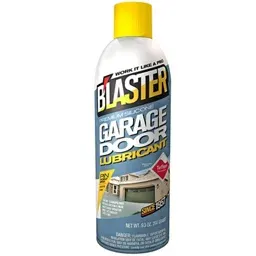
Use a silicone-based or lithium-based garage door lubricant. Skip the WD-40, it evaporates fast and leaves your parts dry. Use white lithium grease or a silicone-based spray instead. Spray a light coat on:
- Springs: Coat the full length of each coil
- Hinges: Spray the pivot point where the hinge bends
- Rollers: Spray the bearings (the center), not the track surface
- Lock mechanism: Spray the keyhole and latch
- Opener rail: Light spray along the top of the rail where the trolley glides
Skip the tracks themselves. Some people think you should lubricate the track surface, but greasy tracks actually cause rollers to slide instead of roll, and they collect dirt that turns into abrasive grit.
Step 4: Test the Auto-Reverse (2 Minutes)
This is a safety test, and it takes 30 seconds per test:
Mechanical reverse: Place a 2x4 flat on the ground in the center of the door opening. Close the door. When it contacts the board, it should reverse within two seconds. If it doesn't, the opener's force settings need adjustment.
Photo-eye reverse: Start closing the door, then wave your foot through the sensor beam at the bottom of the tracks. The door should reverse immediately. If it doesn't, the sensors need alignment or replacement. This is a federal safety requirement, a door that doesn't reverse is a hazard for kids and pets.
Step 5: Tighten Hardware (2 Minutes)
Grab a socket wrench and go around all the bolts you can reach:
- Track brackets (where the tracks mount to the wall and ceiling)
- Hinge bolts (where hinges attach to the panels)
- Opener bracket (where the opener arm connects to the door)
- Roller brackets
Daily vibration gradually loosens hardware. A loose bracket can lead to a misaligned track, which leads to an off-track door, which leads to a $150+ repair bill. Two minutes with a wrench prevents that.
Step 6: Clean the Tracks (2 Minutes)
Wipe the inside of both tracks with a rag or paper towel to remove dust, cobwebs, and debris. In Florida, you'll be amazed how much gunk accumulates in a month, especially during love bug season and summer storms. Clean tracks mean smoother operation and less wear on rollers.
Seasonal Florida Tips
Summer (June - September)
Lubricate more frequently, every 6 to 8 weeks instead of monthly. Heat and humidity accelerate drying and rust. Check for standing water in the garage after afternoon thunderstorms, which can indicate a worn bottom seal.
Hurricane Season (June - November)
Before any approaching storm, inspect your door's wind reinforcement. If you have a reinforcement kit, make sure the bracing is tight. Check that the auto-lock engages properly. A door that blows in during a storm can destroy your home from the inside out.
Coastal Areas (Year-Round)
If you live within 10 miles of the Gulf, St. Pete, Clearwater, Apollo Beach, Ruskin, salt air corrodes metal faster. Lubricate every 4 to 6 weeks and inspect hardware for corrosion monthly. Consider stainless steel or galvanized replacement hardware when standard parts rust through.
When to Call a Professional
Monthly maintenance handles the small stuff. But schedule a professional inspection once a year for the things you can't safely check yourself, spring tension, cable integrity, opener force calibration, and overall system balance. An annual tune-up from Champions Garage Door Service runs $75 to $125 and catches problems that DIY maintenance can't. Call (813) 999-5749 to schedule yours.