
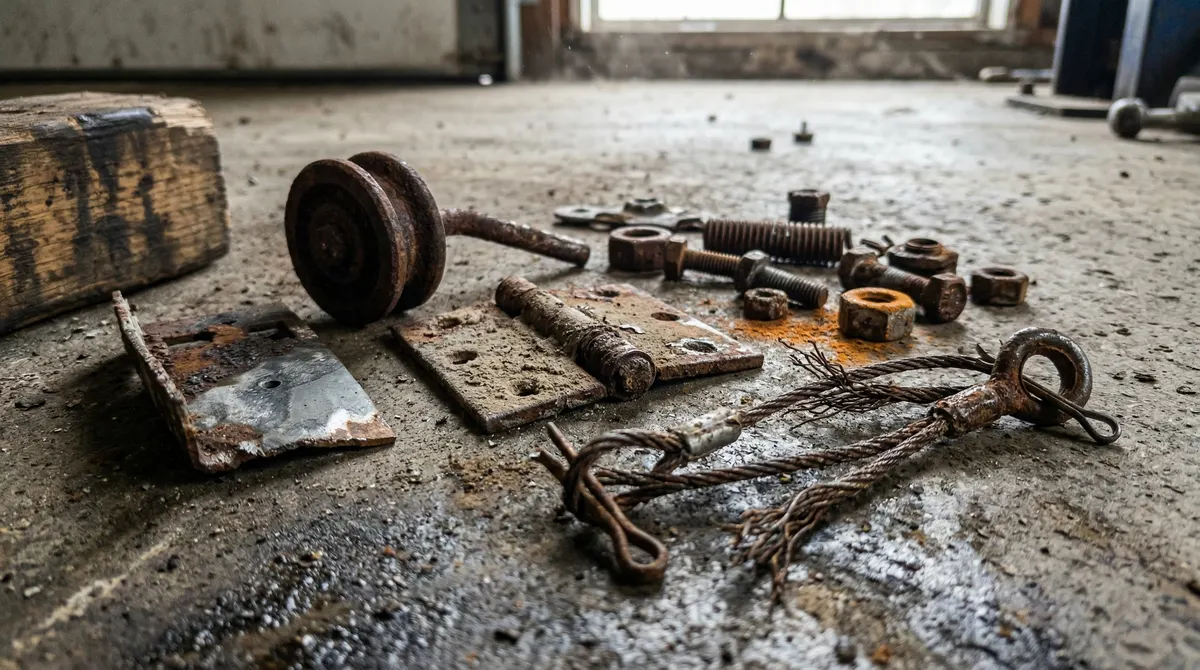
Humidity Is Your Garage Door's Worst Enemy in Florida
People move to Tampa for the weather and then discover what that weather does to everything metal, wood, and rubber in their garage. Tampa's average relative humidity sits between 74% and 80% year-round, with summer mornings regularly hitting 90% or higher. That moisture in the air is quietly attacking your garage door system every single day.
Up north, cold weather is what kills garage doors. In Florida, it's humidity. The damage is slower and less obvious, but it's relentless, and if you don't actively fight it, you'll pay for it in early spring failures, rusted-out hardware, and parts that give out years before they should.
Rust on Springs, Tracks, and Hardware
This is the biggest problem. Garage door springs, tracks, hinges, rollers, cables, and brackets are all steel. Steel and constant moisture don't get along. Here's what happens:
Springs
Torsion springs are the most critical component, and they're also the most vulnerable to humidity damage. Rust on springs does two things: it increases friction between the coils (making the spring work harder and wear faster), and it weakens the metal itself. We routinely see springs in Tampa homes fail at 5 to 6 years instead of the 7 to 10 years you'd expect in a drier climate.
Coastal homes, St. Pete, Clearwater, Apollo Beach, Ruskin, get hit even harder because salt air accelerates corrosion. We've replaced springs in beachfront homes that were only 3 years old.
Tracks
Surface rust on tracks creates roughness that wears out rollers faster and makes the door operate louder. Heavy rust can actually change the track profile enough that rollers don't travel smoothly, leading to binding and off-track issues.
Hinges, Brackets, and Bolts
Every metal fastener and connector on your door is susceptible. Rusty bolts are harder to tighten or remove, rusty hinges don't pivot smoothly, and rust on the bearing plates adds friction to every cycle.
Prevention
- Lubricate springs every 3 months. In coastal areas, every 6 to 8 weeks. Use a silicone-based or white lithium garage door lubricant. The lubricant coats the metal and creates a barrier against moisture.
- Wipe down tracks twice a year with a dry cloth, then apply a light coat of lubricant to hinges and brackets.
- Consider high-cycle or coated springs. Galvanized or powder-coated springs resist rust better than bare steel. They cost $20 to $40 more per spring and last significantly longer in Florida conditions.
- Replace rusted hardware proactively. A rusty hinge costs $8 to replace now. A seized hinge that throws the door off track costs $150+ to fix later.
Wood Door Swelling and Warping
If you have a real wood garage door in Tampa, humidity is your constant battle. Wood absorbs moisture from the air, expanding in humid conditions and contracting when it dries. In Florida, where humidity swings from 90% in the morning to 50% on a dry winter afternoon, this expansion and contraction cycle runs nonstop.
The result: panels that swell and bind in the tracks during summer, joints that loosen, paint that cracks and peels, and, over enough cycles, permanent warping. A warped panel doesn't seal against the weatherstripping, creating gaps for water and bugs.
Prevention
- Seal all six sides of every panel (front, back, top, bottom, left, right) with a quality exterior wood sealer
- Refinish every 2 to 3 years, don't wait for visible damage
- Address any cracking or peeling paint immediately, as exposed wood absorbs moisture fast
- Or switch to a faux-wood steel door and never worry about it again
Weatherstrip Degradation
Florida's heat and humidity cook the plasticizers out of rubber and vinyl weatherstripping faster than in temperate climates. Those plasticizers are what keep the material flexible. Without them, your bottom seal and side seals turn hard, crack, and stop sealing.
In Tampa, expect to replace your bottom door seal every 3 to 5 years, more often if the door faces south or west and bakes in direct sun. Side and top seals last a bit longer since they're shaded by the door frame, but check them annually.
A $25 bottom seal replacement is a lot cheaper than dealing with the water damage, mold, or pest problems that a failed seal allows.
Opener Circuit Board Corrosion
Here's one most people don't think about: the electronic circuit board inside your garage door opener is also affected by humidity. Moisture in the air can cause micro-corrosion on circuit board connections, leading to intermittent operation, phantom commands, or complete failure.
This is especially common in garages with poor ventilation, which is most garages, they're designed to store cars, not to manage humidity. If your opener starts acting erratically (opening or closing by itself, not responding to remotes, lights flickering), corrosion on the logic board is a possibility.
Prevention
- Keep the garage as ventilated as possible, if you have windows, crack them when the humidity isn't extreme
- If you have persistent moisture issues, a small dehumidifier in the garage helps protect both the opener electronics and everything else stored in there
- Consider an opener with a sealed electronics housing if you're in a high-humidity area
Mold and Mildew
Florida garages are mold factories. Warm, humid, often poorly ventilated, it's a perfect environment for mold growth. You'll see it on the garage walls, ceiling, and on the interior surface of the garage door itself, especially on uninsulated or single-layer doors where condensation forms.
Mold on the door itself doesn't damage steel, but it looks terrible and can trigger allergies. On wood doors, mold can actually penetrate the surface and cause structural damage over time.
Prevention
- Improve airflow, even a small fan makes a difference
- Address any water intrusion through the door seals or floor
- Clean mold with a bleach solution (1 cup bleach to 1 gallon water) and a scrub brush
- Consider applying a mold-resistant coating to interior garage walls and the back of the door
- A dehumidifier set to keep humidity below 60% makes the garage much less hospitable to mold
The Tampa Bay Maintenance Schedule
Standard garage door maintenance advice doesn't account for Florida conditions. Here's what we recommend for Tampa Bay homeowners specifically:
- Every 6-8 weeks: Lubricate springs, hinges, and roller bearings. Yes, more often than the national recommendation of every 3-4 months. Our humidity demands it.
- Every 3 months: Wipe down tracks, check for rust on all metal components, inspect weatherstripping.
- Every 6 months: Test door balance, tighten all hardware, check cables for fraying or rust.
- Annually: Professional inspection including spring tension assessment, opener calibration, and full system check.
- Every 3-5 years: Replace bottom door seal and inspect side/top seals.
It sounds like a lot, but most of these tasks take 10 to 15 minutes. The alternative is paying for early spring failures, rusted-out hardware, and premature door replacement.
Champions Garage Door Service knows Tampa's humidity challenges firsthand, we deal with the consequences every day. If your garage door hardware is showing rust, your springs are getting noisy, or you just want a professional set of eyes on your system, call us at (813) 999-5749. We'll tell you exactly what needs attention and what can wait.