
It's Not Just About How It Looks
Picking a new garage door sounds simple until you start looking at options. Steel or aluminum? Insulated or not? What's a wind load rating? Will the HOA approve this color? And how much is this going to cost, really?
In Florida, the decision has a few extra layers that homeowners in other states don't deal with. Our climate is hard on garage doors, heat, humidity, UV, storms, and building codes here are stricter than most of the country. Here's how to think through the decision so you end up with a door that looks right, holds up, and doesn't blow your budget.
Step 1: Choose Your Material
Steel (Best All-Around Choice for Florida)
Steel garage doors make up about 75% of what we install in the Tampa area. Modern steel doors are galvanized, primed, and finished with baked-on paint that holds up well in Florida sun and humidity. They're strong, affordable, and come in every style you can think of, raised panel, flush, carriage house, you name it.
The main thing to watch with steel in Florida is the bottom panel. That's where water collects and rust starts. As long as you keep the bottom seal intact and don't let water sit against the base, a quality steel door lasts 20 to 30 years.
Price range: $800 to $3,500 installed, depending on size, insulation, and style.
Aluminum
Aluminum won't rust, which makes it a strong choice for coastal homes in St. Pete, Clearwater, or anywhere close to the Gulf. Most aluminum doors you see today are the modern full-view style, aluminum frames with glass panels. They look great on contemporary homes and let natural light into the garage.
The downside is that aluminum dents easier than steel and doesn't insulate as well. If you're going aluminum for the looks, just know the garage will be hotter than it would be behind an insulated steel door.
Price range: $1,200 to $4,000 installed.
Wood
Real wood doors are beautiful. No argument there. A custom cedar or mahogany carriage house door turns heads. But in Florida, wood is high maintenance. Humidity causes swelling. Sun causes cracking and fading. Rain promotes rot. You'll need to refinish every 2 to 3 years, and even then, expect a shorter lifespan than steel.
If you love the look of wood, consider a faux-wood steel door. Clopay's Canyon Ridge and Amarr's Classica lines look nearly identical to real wood but need zero refinishing and last twice as long.
Price range: $2,000 to $6,000+ for real wood; $1,500 to $3,500 for faux wood.
Step 2: Decide on Insulation
In Florida, insulation matters more than most people think, not for keeping cold out, but for keeping heat out. An uninsulated garage in Tampa hits 120 to 140 degrees on a summer afternoon. If that garage shares a wall with your living room or has a bedroom above it, that heat drives your AC bill up.
- Non-insulated (R-0): Single layer of steel. Cheapest option, but your garage becomes an oven from May through October.
- Polystyrene insulated (R-6 to R-9): Foam boards between steel layers. Decent improvement at a moderate price bump.
- Polyurethane insulated (R-12 to R-18): Foam injected between steel skins. Best thermal performance and also makes the door quieter and more dent-resistant. This is what we recommend for most Tampa homes.
The price difference between non-insulated and polyurethane insulated is typically $200 to $500. Most homeowners with attached garages save $100 to $200 per year on energy bills after switching to an insulated door, so it pays for itself within a few years.
Step 3: Understand Hurricane Ratings
Florida building code requires garage doors to meet specific wind load ratings. In Hillsborough County, that's typically 130 to 140 mph design wind speed. Pinellas County is 140 to 150 mph because of the coastal exposure.
When you buy a new door, it needs to meet these standards, your installer handles the engineering and permitting. But here's something worth knowing: a hurricane-rated door combined with other wind mitigation features can lower your homeowner's insurance premium by 10% to 30%. In Tampa, where insurance rates keep climbing, that savings adds up fast.
Don't cheap out on the wind rating to save $200. The insurance savings alone covers the difference within a year or two, and you get a door that actually protects your home when it matters.
Step 4: Match Your Home's Style
Your garage door is roughly 30% of your home's front-facing exterior. It's one of the first things people see. A door that clashes with the house style drags down the whole look, and a door that complements the architecture can dramatically boost curb appeal.
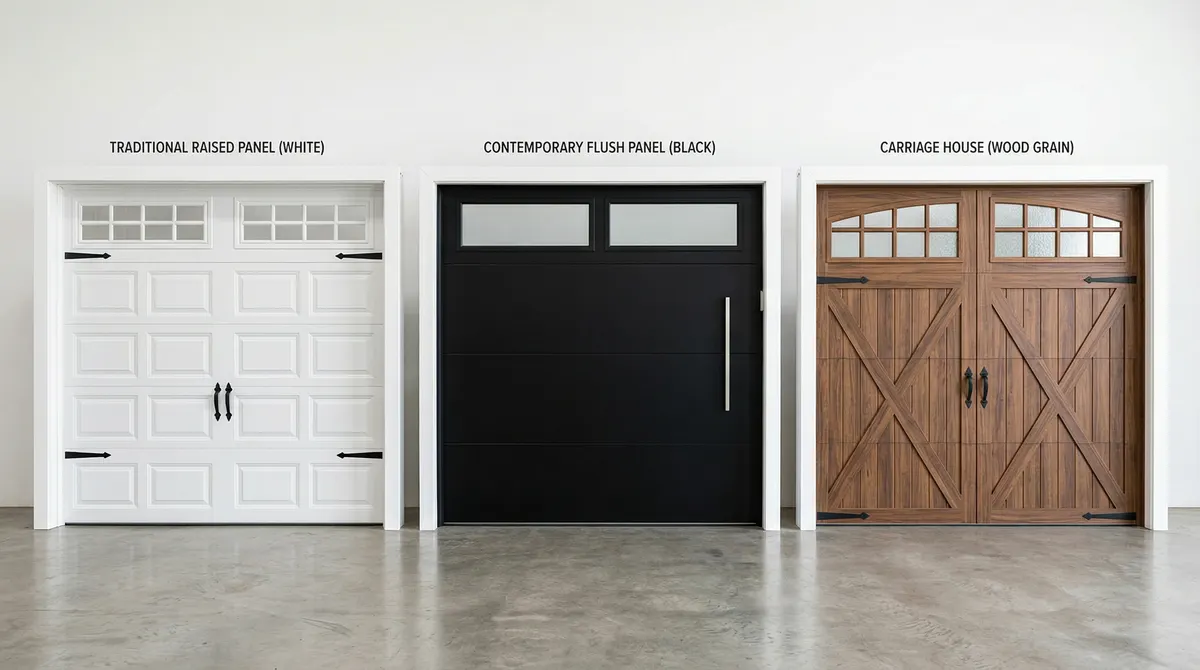
- Traditional/Colonial: Raised panel doors with or without windows in the top section. Classic look that fits most Tampa neighborhoods.
- Mediterranean/Spanish: Carriage house style with decorative hardware. Arched windows in the top panels tie into the arch details common in Mediterranean architecture.
- Contemporary/Modern: Flush panels or full-view glass. Clean lines, minimal details. Popular in newer Tampa developments and waterfront homes.
- Craftsman: Board-and-batten style or carriage house with simpler hardware. Works well with the Craftsman-style homes you see in older Tampa neighborhoods like Seminole Heights.
Step 5: Check Your HOA
If you live in an HOA community, and a huge percentage of Tampa suburban homes do, check the guidelines before you order a door. Most HOAs regulate garage door color, style, and sometimes material. Some require pre-approval before installation.
Common HOA restrictions we run into:
- Color must match or coordinate with the home's exterior paint scheme
- No full-glass or modern-style doors in traditional neighborhoods
- Specific approved manufacturers or style categories
- No visible hardware modifications
Get approval in writing before you buy. We've seen homeowners forced to replace a brand-new door because they didn't get HOA sign-off first. That's an expensive mistake.
Step 6: Set Your Budget
Here's what the typical garage door installation cost looks like in Tampa:
- Budget ($800 - $1,200): Basic steel, insulated, raised panel. No frills but solid and functional. Wind rated for code.
- Mid-range ($1,200 - $2,500): Higher insulation, more style options, carriage house designs, better paint finish. This is where most homeowners land.
- Premium ($2,500 - $4,500+): Custom styles, faux wood, full-view aluminum and glass, premium insulation, decorative hardware. Statement pieces.
Remember that a new garage door is one of the best home improvements for resale value. Nationally, you recoup about 90% to 95% of the cost when you sell. In Florida's competitive housing market, a great-looking garage door helps your home sell faster, too.
Need help sorting through the options? Champions Garage Door Service offers free in-home estimates where we bring samples and walk you through everything. Call (813) 999-5749 to schedule a visit.