
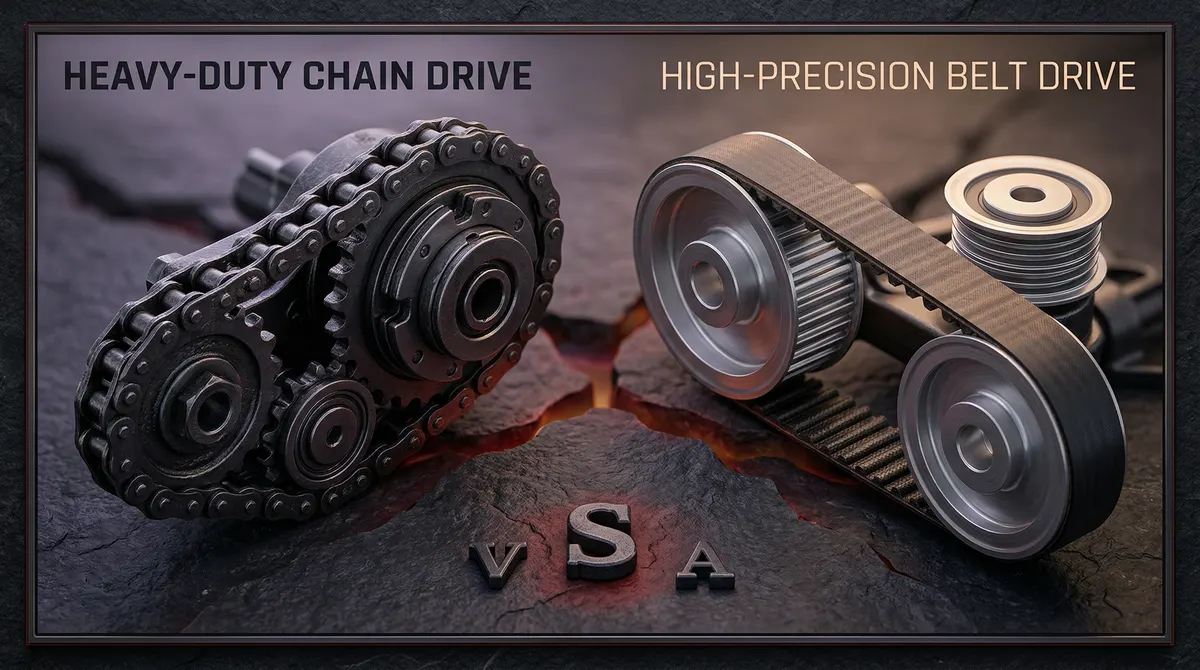
The Two Most Common Drive Types
When you're shopping for a new garage door opener, the first real decision is belt drive or chain drive. Everything else, brand, smart features, horsepower, comes after you answer this one. Both types work fine. Both will open and close your door thousands of times. But they do it differently, and that difference matters depending on your garage setup.
Here's the honest rundown from someone who installs both types every week across the Tampa Bay area.
How Chain Drive Openers Work
A chain drive opener uses a metal chain, basically a heavy-duty bicycle chain, to push and pull a trolley along a rail. The trolley connects to your garage door via a metal arm. Motor turns, chain moves, trolley slides, door opens. Simple.
Chain drives have been around for decades. They're the original powered garage door opener design, and they're still the most commonly installed type in the U.S. If your opener is more than 10 years old, there's a good chance it's a chain drive.
Chain Drive Pros
- Price: Chain drive openers typically cost $50 to $100 less than belt drives of the same brand and feature level. A solid chain drive unit like the LiftMaster 8165 runs around $200 to $250 installed, versus $280 to $350 for the belt drive equivalent.
- Durability: Metal chains handle heavy loads well. For oversized or extra-heavy doors, chain drives are the go-to. They also handle temperature extremes without stretching or wearing the way rubber can.
- Proven reliability: There's a reason chain drives have been the standard for 50+ years. The design is straightforward, parts are cheap and available everywhere, and any garage door technician can service them in their sleep.
Chain Drive Cons
- Noise: This is the big one. Chain drives are loud. Metal chain rattling along a metal rail creates vibration and noise that travels through the ceiling and walls. If your garage is under a bedroom, you'll hear it. Your family will hear it. At 6 AM, everyone hears it.
- Vibration: That metal-on-metal action creates vibration that loosens hardware faster and transfers into the structure of your home. Over years, this can actually loosen the mounting brackets.
- Maintenance: Chains need periodic lubrication and occasional tension adjustment. Not a big deal, but it's one more thing to stay on top of.
How Belt Drive Openers Work
A belt drive works exactly like a chain drive, except the chain is replaced with a reinforced rubber or fiberglass belt. Same trolley system, same rail, same basic mechanics. The only difference is what's doing the pulling.
Belt drives became popular about 15 years ago and have been steadily taking over the market. Most mid-range and premium openers from LiftMaster, Chamberlain, and Genie now default to belt drive.
Belt Drive Pros
- Quiet operation: Night and day difference compared to a chain drive. A belt drive opener is so quiet you might not know it's running from inside the house. For homes with bedrooms above or next to the garage, which is most two-story homes in Tampa, this alone is worth the upgrade.
- Smooth operation: The rubber belt absorbs vibration instead of transmitting it. Your door moves more smoothly, and there's less stress on the door hardware, tracks, and opener mounting.
- Less maintenance: No lubrication needed on the belt. No tension adjustments. Once it's installed and set up correctly, you pretty much forget about it.
Belt Drive Cons
- Price: Expect to pay $50 to $100 more for a belt drive model versus the chain drive equivalent. On a $300 opener, that's noticeable. On a $500 opener, less so.
- Belt wear in extreme heat: In theory, rubber belts can degrade faster in extreme temperatures. In practice, we haven't seen this be a real problem in Tampa. Modern belts are reinforced with steel or fiberglass and hold up fine in Florida heat. We've pulled 12-year-old belts that still looked almost new.
- Heavy door limitations: For extremely heavy doors, some commercial doors or oversized custom residential doors over 400 pounds, a chain drive is still the safer bet. Belt drives handle standard residential doors without issue, but there's a weight limit where chain becomes the better choice.
Which Brands Offer Which?
All three major brands, LiftMaster, Chamberlain, and Genie, make both chain and belt drive openers. Here's where they land:
- LiftMaster: Their best sellers (87504, 84505R) are belt drive. Chain drive options exist but aren't pushed as hard in their lineup.
- Chamberlain: Strong in both. The B6765T (belt) and C2405 (chain) are both popular retail picks.
- Genie: The StealthDrive (belt) is their flagship. They also still make screw-drive openers, which is a third option that most of the market has moved away from.
Our Recommendation
Get a Belt Drive If:
- Your garage is attached to your home (most Florida homes)
- You have bedrooms above or next to the garage
- Anyone in the household has an early or late schedule
- You want the quietest, lowest-maintenance option
Get a Chain Drive If:
- Your garage is detached from the house (noise doesn't matter)
- You have an extra-heavy or oversized door
- Budget is tight and the $50-$100 savings matters right now
- You're replacing a chain drive and don't mind the noise
For about 80% of the Tampa homeowners we work with, a belt drive is the right call. The price difference is small, the noise difference is huge, and there's no durability penalty for standard residential doors. Call Champions Garage Door Service at (813) 999-5749 if you want help choosing the right opener for your setup.